
Aircraft Selection & Ownership / Why Do Private Jets Fly at Higher Altitudes?
Why Do Private Jets Fly at Higher Altitudes?
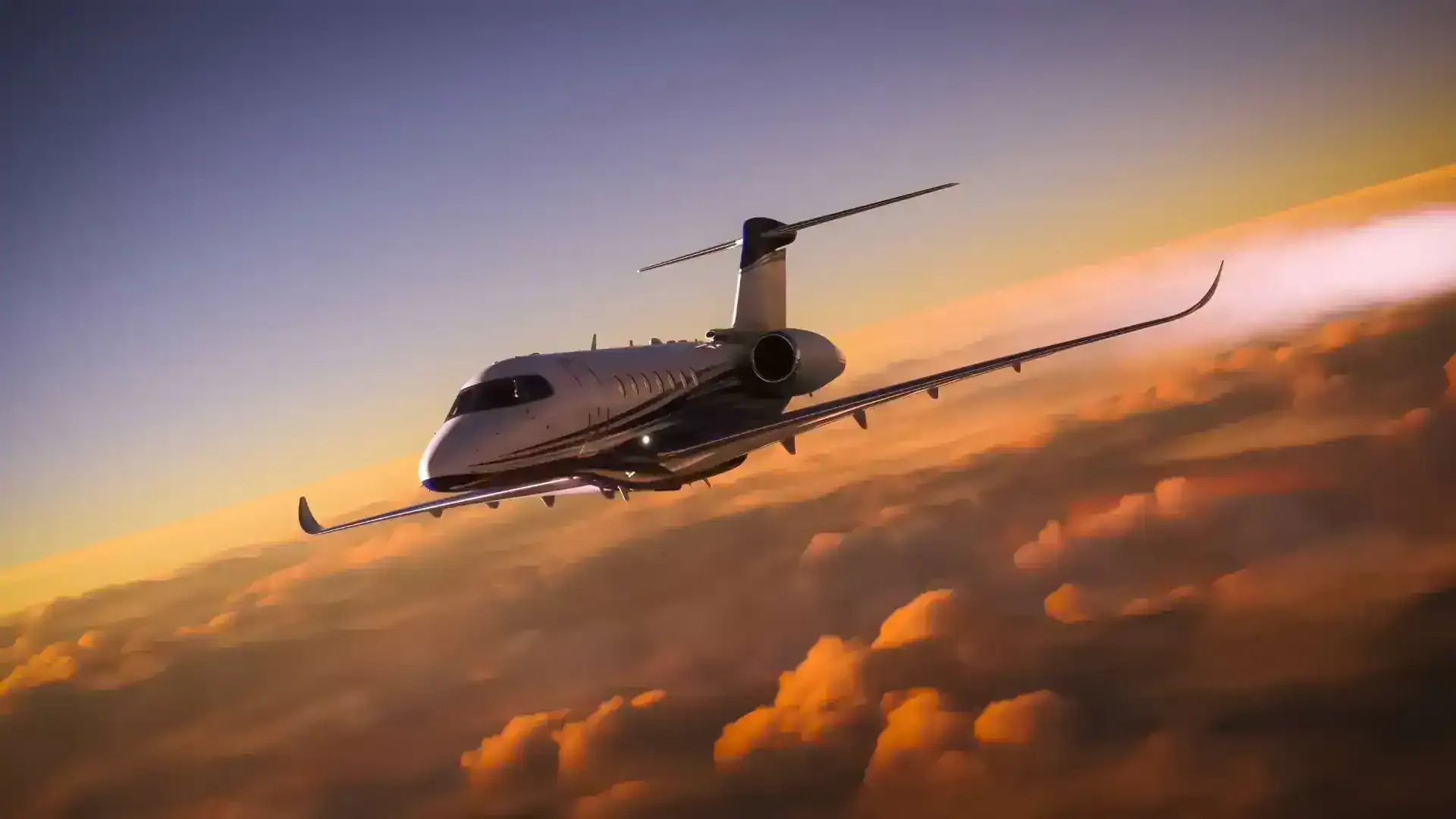
- Avoid air traffic congestion
- Experience smoother flights as pilots are often able to circumnavigate bad weather
- Access more direct routes, saving both time and fuel
1. Smoother Flights and Direct Routes
Private jets usually fly higher than commercial jets. Commercial airliners generally cruise between 31,000 and 39,000 feet, while many private jets cruise between 41,000 and 45,000 feet, and large-cabin jets like the Gulfstream G650 can climb to 51,000 feet. This height difference has several benefits:- Less turbulence: Flying at higher altitudes means private jets can avoid most of the air traffic and weather problems that occur at lower levels. This leads to a smoother flight experience and ensures passenger comfort.
- Fewer restrictions: By flying above commercial planes, private jets have fewer limitations from air traffic control, making their journeys more seamless.
- Shorter travel times: Higher altitudes allow private jets to take more direct routes without the congestion found at lower altitudes. This not only saves time but also reduces fuel consumption, benefiting both operational costs and the environment.
2. Avoiding Turbulence and Bad Weather Systems
Flying at higher altitudes allows private jets to maintain a smoother and more stable flight path by avoiding turbulence layers and severe weather systems. Turbulence often occurs in the lower atmosphere where weather fronts, jet streams, and thermal currents are more prevalent. By cruising at altitudes between 41,000 to 45,000 feet, private jets can fly above these disruptive elements. Advantages of flying at increased altitudes include:- Passenger Comfort and Safety: Higher altitudes typically offer more stable atmospheric conditions, reducing the likelihood of encountering turbulence. This ensures a more comfortable experience for passengers who can travel without the discomfort of sudden jolts and shakes.
- Clearer Skies: Operating at higher altitudes means flying in airspace with fewer clouds and less atmospheric moisture. This results in clearer skies that contribute to a smoother flight experience. Pilots are also often able to fly above weather
- Less Atmospheric Disturbances: At these elevated levels, private jets are less likely to be affected by weather systems such as thunderstorms or heavy rain, which usually occur at lower altitudes.
3. The Impact on Fuel Efficiency and Air Traffic at Higher Altitudes
Flying at higher altitudes significantly improves fuel efficiency for private jets. The thinner air at these heights reduces the resistance on the aircraft, known as drag. With less drag, the jet requires less power to maintain its speed, leading to lower fuel consumption. This increase in fuel efficiency is not only beneficial for cost savings but also for the environment, as it results in reduced carbon emissions. Benefits of Higher Altitudes for Air Traffic:- Less Congested Airspace: Private jets flying between 41,000 and 45,000 feet are usually above the commercial airline traffic, which typically cruises around 35,000 feet. This separation reduces the chances of air traffic congestion.
- Smoother Flow Control: With fewer planes in the same airspace, private jets experience smoother flow control. Air traffic controllers can give more direct routes, which cuts down on flight times and saves even more fuel.
- Direct Paths: Having the ability to fly straighter routes not only saves time but also reduces unnecessary fuel usage from taking longer routes or circling in holding patterns.
Advantages of Private Jet Travel over Commercial Airlines
Private jet travel offers numerous benefits that extend beyond the advantages of flying at higher altitudes. Here are some key perks:1. Access to Smaller, Less Busy Airports
Private jets can land at smaller airports with shorter runways, enabling you to avoid the congestion and delays typical of larger commercial airports. This access not only saves time but also provides enhanced privacy.2. Enhanced Privacy Measures
Smaller, more convenient airports often come with less crowded facilities, ensuring a more discreet and comfortable travel experience. This is particularly beneficial for high-profile individuals seeking confidentiality.3. Convenience of Fixed-Base Operator (FBO) Check-In
FBOs offer personalized services tailored to private jet travelers. From expedited security checks to luxurious waiting lounges, the FBO experience streamlines your journey from start to finish.4. Time Efficiency
The ability to take off and land at more flexible times without being bound by commercial flight schedules is another advantage. This flexibility allows for better planning and maximizes your time efficiency. By leveraging these benefits, private jet travel elevates your overall flying experience, making it a preferred choice for those valuing convenience, privacy, and time savings.Frequently Asked Questions
How high do private jets fly?
It depends on the aircraft. Light and midsize jets such as the Phenom 300, Citation CJ3 and Challenger 350 are certified to 45,000 feet, and large-cabin jets like the Gulfstream G650 to 51,000 feet. Turboprops fly lower: the King Air 350 tops out at 35,000 feet and the Pilatus PC-12 at 30,000./p>
Do private jets fly higher than commercial planes?
Usually, yes. Most airliners cruise between about 31,000 and 39,000 feet, and even the newest wide-bodies are certified to around 43,000 feet. Many business jets can operate above that band, which keeps them clear of most airline traffic.
Is flying higher smoother?
Generally. Higher altitudes put the aircraft above most storms and the bumpiest low-level air, but clear-air turbulence can still occur at any altitude, so keep your seatbelt fastened while seated.
Conclusion
Flying at higher altitudes offers private jets several key advantages. Elevated cruising altitudes enable smoother flights, avoid turbulence and adverse weather, and facilitate more direct routes.
Experiencing the benefits of private jet travel firsthand underscores its value. The combination of time savings, enhanced comfort, and increased flexibility presents a compelling case for choosing this mode of transportation. Whether it’s the ability to access smaller airports or enjoy personalized services, private jets redefine luxury travel in an unmatched manner.