
Airports & FBOs / What Is an FBO? Private Aviation Terminals Explained
What Is an FBO? Private Aviation Terminals Explained
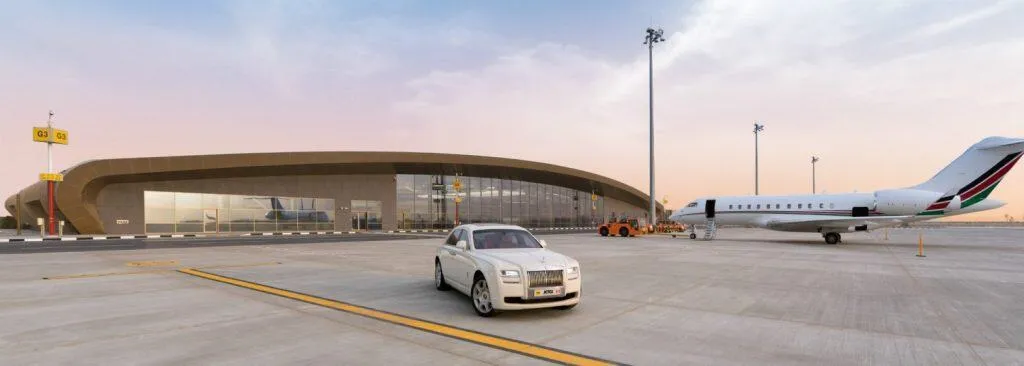
An FBO, short for fixed-base operator, is the private terminal and service company at an airport that looks after private and business aircraft. For charter passengers, it's where the trip starts and ends: you arrive at the FBO instead of the airline terminal, wait in its lounge if you need to, and walk out to your aircraft on the ramp. For the aircraft and crew, the FBO provides fuel, parking, hangar space and ground handling.
Most airports have at least two FBOs, often big brand names. Some airports also have boutique, locally owned FBOs, such as Jet Center Santa Fe, where the customer service is exceptional. Have a preferred FBO at your departure or destination airport? Let us know and we'll build the trip around it.
What does FBO stand for?
FBO stands for fixed-base operator. The name dates back to early aviation, when operators with a permanent ("fixed") base at an airport were distinguished from pilots who traveled from town to town. Today an FBO is a business licensed by the airport to serve general aviation: private jets, charter flights, business aircraft and smaller planes.
What services does an FBO provide?
An FBO serves two groups: the people flying and the aircraft itself.
For passengers:
- A private lobby and lounge, usually with seating, Wi-Fi, refreshments and restrooms, without commercial crowds.
- Meeting rooms and quiet spaces for calls or a quick meeting before departure.
- Concierge help: ground transportation, hotel bookings and catering coordination.
- Fast boarding. You walk from the lobby to the aircraft on the ramp, and at many FBOs your car can be brought out to the plane where airport rules allow.
- Privacy and security, with controlled access to the ramp and discreet handling for high-profile travelers.
For the aircraft and crew:
- Fueling and de-icing in winter.
- Ramp parking and hangar space.
- Ground handling: marshaling the aircraft in, towing, baggage loading and lavatory service.
- Crew facilities, such as pilot lounges and flight-planning rooms.
- Maintenance. Some FBOs have repair shops on site or work closely with one.
FBO vs. airline terminal
| FBO (private terminal) | Airline terminal | |
|---|---|---|
| Arrival time | Usually 15–30 minutes before departure | Often 1.5–3 hours before departure |
| Security | ID checked against the manifest; usually no TSA line | TSA checkpoint |
| Parking | Steps from the door, sometimes planeside | Garages and shuttles |
| Waiting | Quiet lounge, often for only a few minutes | Crowded gate areas |
| Boarding | Walk out to your aircraft | Boarding groups, jet bridge or bus |
| Bags | Handed to the crew or FBO staff at the car | Check-in counter and baggage claim |
Do you pay the FBO directly?
Usually not. On a charter, the FBO bills the aircraft operator for handling, parking and facility fees, and those costs are built into your charter quote. If you're comparing quotes, ask whether each one is all-in, so FBO and other airport fees aren't added later.
How to choose the right FBO
When an airport has several FBOs, the right one depends on your trip:
- Where you're going: some FBOs sit closer to the airport exit for the city or venue you're heading to.
- Who's traveling: families, pets and large groups benefit from space, private rooms and easy car access.
- Privacy: some FBOs are better set up for discreet arrivals.
- International trips: customs clearance works differently at each airport, so this affects which FBO and airport you use.
We take care of FBO selection as part of every trip, and we're happy to use your favorite.
FBOs in Southern California
Los Angeles has some of the busiest private aviation airports in the country. Van Nuys (VNY) alone has several FBOs, including Clay Lacy Aviation and Signature, and Burbank, Santa Monica, Long Beach, John Wayne and Santa Barbara each have their own options. For a closer look, see our guides to choosing a private terminal in Southern California and choosing the right Los Angeles airport for your private jet.
Frequently Asked Questions
What does FBO stand for?
FBO stands for fixed-base operator: a company at an airport that provides fuel, parking, ground handling and terminal services for private and business aircraft. Most airports have at least two.
Do private jet passengers go through TSA at an FBO?
Usually not. Most private and charter flights don't use a TSA checkpoint. Your crew or the FBO checks your ID against the passenger manifest instead. Some larger charter aircraft follow additional security procedures, and international trips include passport and customs checks.
How early should I arrive at an FBO?
For most domestic charter flights, 15 to 30 minutes before departure is enough. Allow more time for international flights, large groups or a lot of luggage, and follow any timing your broker gives you.
Can I park at the FBO?
Most FBOs have parking steps from the lobby, and many can bring your car out to the aircraft where airport rules allow. Ask in advance if you'd like planeside access.
Are FBO fees included in my charter price?
On a charter flight, FBO handling, parking and facility fees are normally billed to the operator and built into your quote. Ask your broker to confirm the quote is all-in so there are no surprises.
Plan Your Next Private Flight
From the FBO to the aircraft to the car waiting when you land, TruNorth Jets handles every step. Request a quote or contact us with your route and preferred FBO.