
Booking & Pricing / Flying Private With Your Dog: The Complete Pet Travel Guide
Flying Private With Your Dog: The Complete Pet Travel Guide
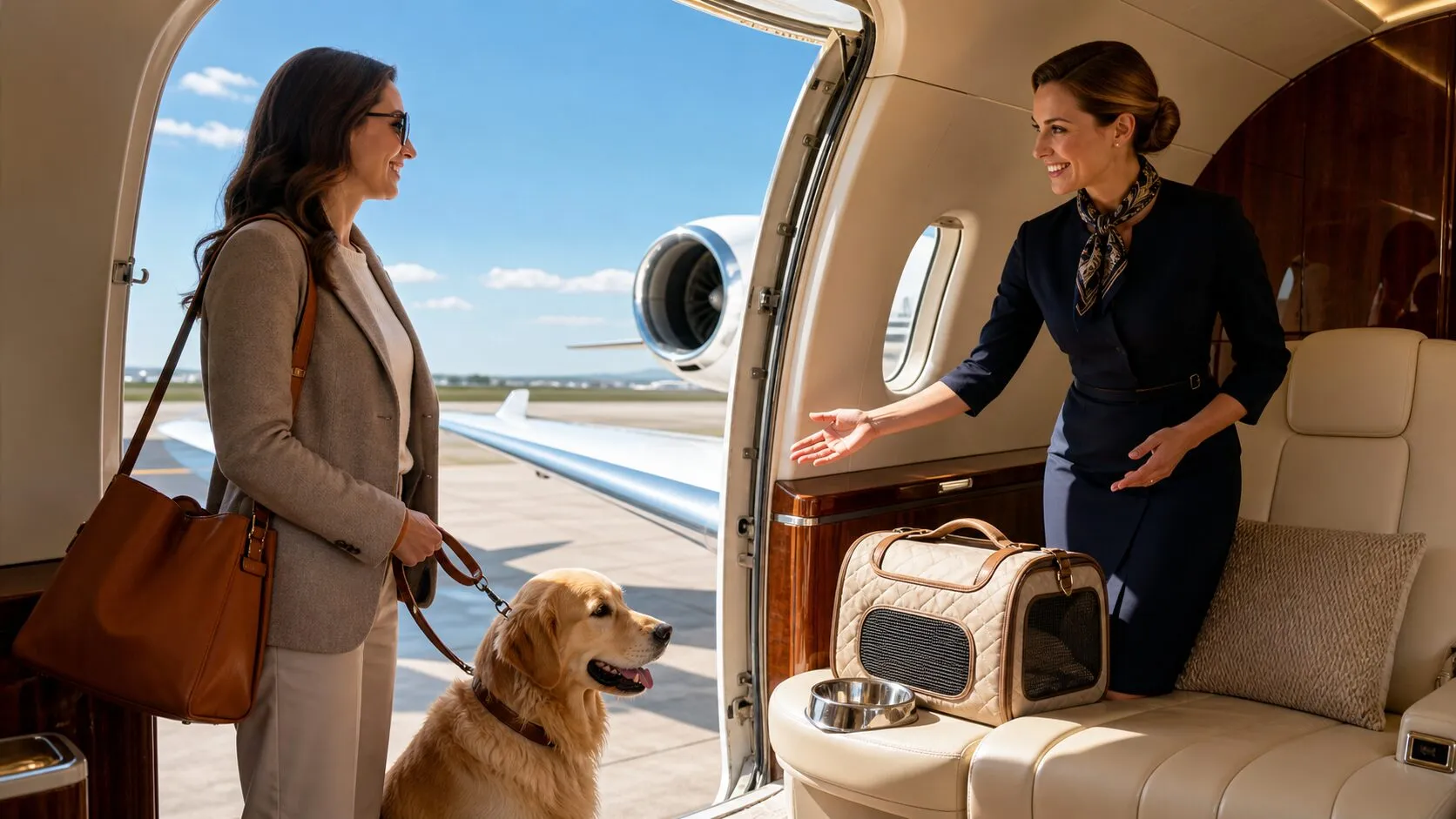
Flying Private with Your Dog: the Complete Pet Travel Guide
Dogs are family, and their travel experience should reflect that. A pet-friendly private jet charter keeps your dog close from departure through arrival, with more privacy, schedule control, and comfort than a typical commercial trip.
Instead of crowded terminals, long walks through public gate areas, baggage claim delays, and time apart from your pet, we can coordinate a flight around your plans and your dog’s needs. This guide covers aircraft selection, booking details, health records, in-flight care, and international planning, including warm-weather considerations for summer travel.
Private Aviation Keeps Dogs Close and Comfortable
Commercial pet travel can involve carrier rules, limited flight options, seasonal limits, and uncertainty around airport timing. Private aviation offers a more personal alternative. On many pet-friendly private jet charter flights, dogs travel in the main cabin with their owners rather than in a cargo hold.
That means you can keep an eye on your dog, offer reassurance, and preserve familiar routines. Your dog may be able to rest beside you on a blanket or bed instead of spending hours separated from the people and surroundings they know.
Private flights also provide greater flexibility around many common commercial restrictions. Dogs do not typically need to remain in a carrier for the entire flight, although a leash, harness, or other secure restraint may be appropriate during boarding, taxi, takeoff, and landing. Aircraft setup, operator safety policies, and your dog’s behavior still matter, so we confirm those details before arranging the flight.
A private itinerary is not simply about allowing a pet onboard. We match the right operator, cabin, airport experience, and schedule to your household’s travel needs, whether you are heading to a business meeting, a seasonal residence, or an international destination.
The Right Cabin Makes Every Dog More Comfortable
The best aircraft depends on your dog’s size, the number of travelers, flight distance, luggage, and how much space your pet needs to settle in comfortably.
For shorter regional flights, turboprops and light jets can work well for small or medium-sized dogs traveling with a limited number of passengers. These aircraft can be practical for secondary airports, resort areas, and destinations where commercial schedules are inconvenient.
Larger cabins offer more breathing room for longer flights or larger households. We often consider these options:
- Midsize and super midsize jets for larger dogs, multiple pets, family travel, or longer domestic trips
- Heavy jets for large breeds, added luggage, household staff, and spacious cabin arrangements
- Ultra-long-range aircraft for extended coast-to-coast or international flights
- Turboprops and light jets for efficient regional travel with smaller travel parties
A larger aircraft can allow room for dog beds, water bowls, supplies, and an appropriate potty setup. Before we recommend an aircraft, we review cabin dimensions, passenger count, luggage volume, flight duration, and your dog’s individual needs. A calm dog may be perfectly content in a light jet, while a large breed or multi-pet household may be more comfortable in a cabin with greater floor space.
Share the Details That Shape a Smooth Flight
Early details make a meaningful difference. When you request a pet-friendly private jet charter, we ask about your dog’s breed, approximate weight, age, temperament, mobility, and past flight experience. It also helps to share any anxiety triggers, medical conditions, dietary restrictions, or special handling needs.
Practical trip details matter just as much. We coordinate around your preferred departure airport, destination, departure time, number of human passengers, luggage needs, ground transportation, and possible technical stops. Thoughtful planning can reduce unnecessary time on the ground, which is especially welcome during August heat.
For domestic travel, we recommend bringing:
- A recent veterinary health certificate when required
- Microchip information, if applicable
- Medication details and feeding instructions
- Contact information for your dog’s veterinarian
Our role is to coordinate with trusted Part 135 operators and confirm the applicable pet policies and documentation requirements before departure. If your dog needs a particular cabin setup or extra attention during boarding, we include that information in the flight planning process.
Help Your Dog Settle in for Longer Flights
A familiar routine can make flying feel far less disruptive. Before departure, give your dog time for exercise and a bathroom break, then bring a favorite blanket, bed, or toy into the cabin. Familiar items can help create a calmer space once the aircraft door closes.
Medication or calming supplements should never be introduced for the first time on travel day. If your dog has anxiety around unfamiliar sounds, movement, or separation, discuss options with your veterinarian well before the flight. During travel, dogs should remain supervised and should never interfere with crew duties or required safety procedures.
Hydration deserves attention, particularly during summer travel. Bring your dog’s familiar water, or ask us to arrange water in advance. Small, regular offerings are often easier than allowing your dog to drink a large amount all at once. Avoid a heavy meal immediately before departure, but pack your dog’s usual food for longer flights or schedule changes.
For extended missions, we can discuss practical potty solutions, including absorbent pads, cleanup supplies, or artificial grass pads when appropriate for the cabin. A planned fuel stop may also allow for a supervised bathroom break. During hot weather, ground transfers should be timed to limit your dog’s exposure to hot pavement and high outdoor temperatures before boarding and after landing.
International Pet Travel Questions
International travel requires more lead time because every destination sets its own pet-entry rules. Depending on your route, your dog may need a rabies vaccination, microchip, parasite treatment records, laboratory testing, a destination-specific veterinary certificate, or an import permit. Requirements can change based on the country of origin, transit points, and final destination.
For many international flights departing from the United States, a USDA-accredited veterinarian must complete the required health certificate. Some destinations also require USDA APHIS endorsement before departure. Since certain documents must be issued within a narrow window and permits can take time to process, we recommend beginning the planning process well ahead of your intended flight date.
Travel Together With Greater Comfort
At Trunorth Jets, we help clients arrange a pet-friendly private jet charter that prioritizes privacy, flexibility, and a calmer experience for every traveler. Our team can coordinate an itinerary that suits your schedule while accommodating your dog’s needs in the cabin. Contact us to discuss your upcoming trip and preferred travel arrangements.
FAQs
Can My Large Dog Fly In The Cabin?
Often, yes. Larger dogs can typically travel in the main cabin on an appropriate aircraft, but the final arrangement depends on cabin space, the selected operator, safety policies, and your dog’s needs.
Does My Dog Need A Carrier On A Private Jet?
A carrier is not always required during the flight. A leash, harness, or secure restraint may still be needed during boarding, taxi, takeoff, and landing, depending on the operator and aircraft.
What Documents Are Needed For Domestic Private Travel?
Documentation may include current rabies records, a health certificate when required, microchip information if applicable, medication details, and veterinarian contact information. Requirements depend on the operator and itinerary.
How Far In Advance Should I Plan An International Flight With My Dog?
International planning should begin as early as possible. Import permits, veterinary appointments, laboratory testing, and government endorsements may have separate deadlines.
Do International Destinations Require A USDA Health Certificate?
Many international destinations require a health certificate completed by a USDA-accredited veterinarian, and some also require USDA APHIS endorsement. Current government regulations and destination rules determine the exact requirements.